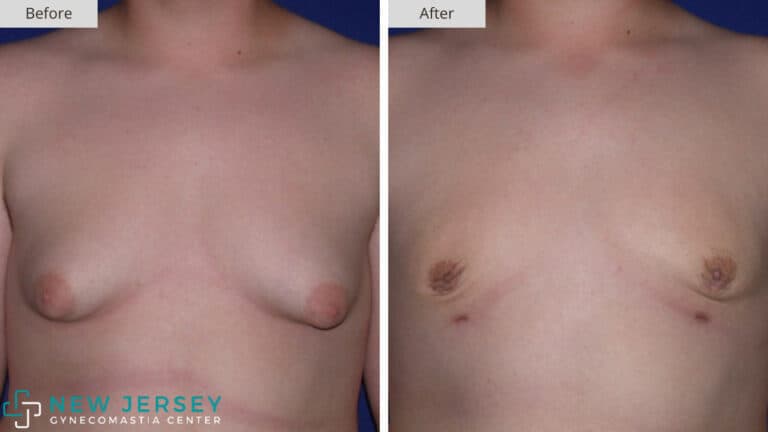
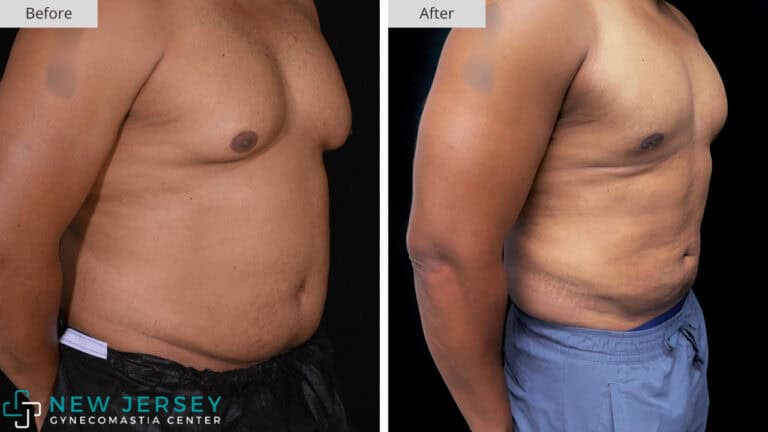
Some cases of gynecomastia stand out because of their complexity. Others stand out because they are incredibly common, the type of case I see week in and week out. This patient fit squarely into that second category.
He came to see me looking for a solution to something he had struggled with for years. Like many patients, his concern was not about his overall weight or fitness level. He simply felt like his chest did not match the rest of his body. No matter how much he exercised or how healthy he ate, the appearance of his chest remained the same.
This was a classic case of gynecomastia. It was the type of presentation that highlights just how common this condition really is and how difficult it can be to treat without surgery.
Exam and Surgical Planning
During his exam, it was clear that his chest contour was being affected by a few different factors. These cases are never just about fat alone.
This patient had:
- Excess fatty tissue creates bulk and roundness
- Dense glandular tissue directly under the nipples that could not be reduced with liposuction
- A small amount of loose skin that slightly affected the overall shape
The best approach in cases like this involves addressing all three of these components together. Simply removing the fat would not have produced the flat, contoured result this patient wanted.
Surgical Technique
During surgery, I began with liposuction to remove the fatty tissue throughout the chest. This helped reduce the overall size and allowed me to shape the chest wall more naturally.
After the fat removal, I made a small incision along the lower border of each areola. This location helps conceal the scar within the natural transition of the skin. Through this incision, I carefully excised the firm glandular tissue that was responsible for most of the projection beneath the nipples.
Removing the glandular tissue is one of the most critical steps in treating gynecomastia properly. Without this step, many patients are left with residual puffiness or an unnatural contour.
In this patient, the amount of skin laxity was mild enough that no additional skin removal was necessary. I was confident that the skin would retract well once the underlying tissue was reduced.
Recovery and Healing
Recovery after gynecomastia surgery is relatively straightforward, but it does require patience. I always advise my patients that results evolve over time, with most of the swelling resolving in the first month, but final contour improvements continuing over several months.
For this patient, recovery involved:
- Wearing a compression garment for several weeks to minimize swelling and support the healing skin
- Returning to light activity within a few days
- Avoiding chest workouts and strenuous exercise for about six weeks
- Gradual fading of the incisions over the following months
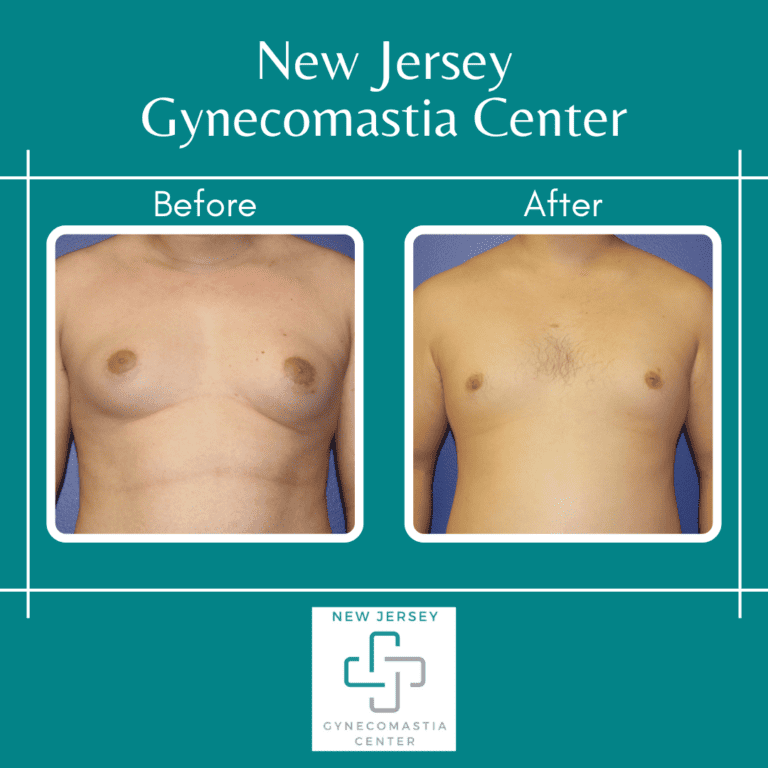
By his three-month follow-up, his results were taking shape very nicely. His chest appeared much flatter and more natural. The glandular fullness was gone, and the skin had tightened well without the need for additional procedures.
Final Results
What stands out most in this case is the balance of the result. His chest looks natural. The nipples now sit flat against the chest wall. The scar is very discreet, sitting at the lower edge of the areola, where it is difficult to notice.
Cases like this are some of the most rewarding because they correct a problem that patients have often lived with for years. This has helped him feel more comfortable in his body. Whether wearing a fitted shirt, heading to the beach, or just looking in the mirror, the difference is both physical and emotional.
Gynecomastia surgery is not just about removing tissue. It is about restoring balance and confidence. This case is a perfect example of that.